
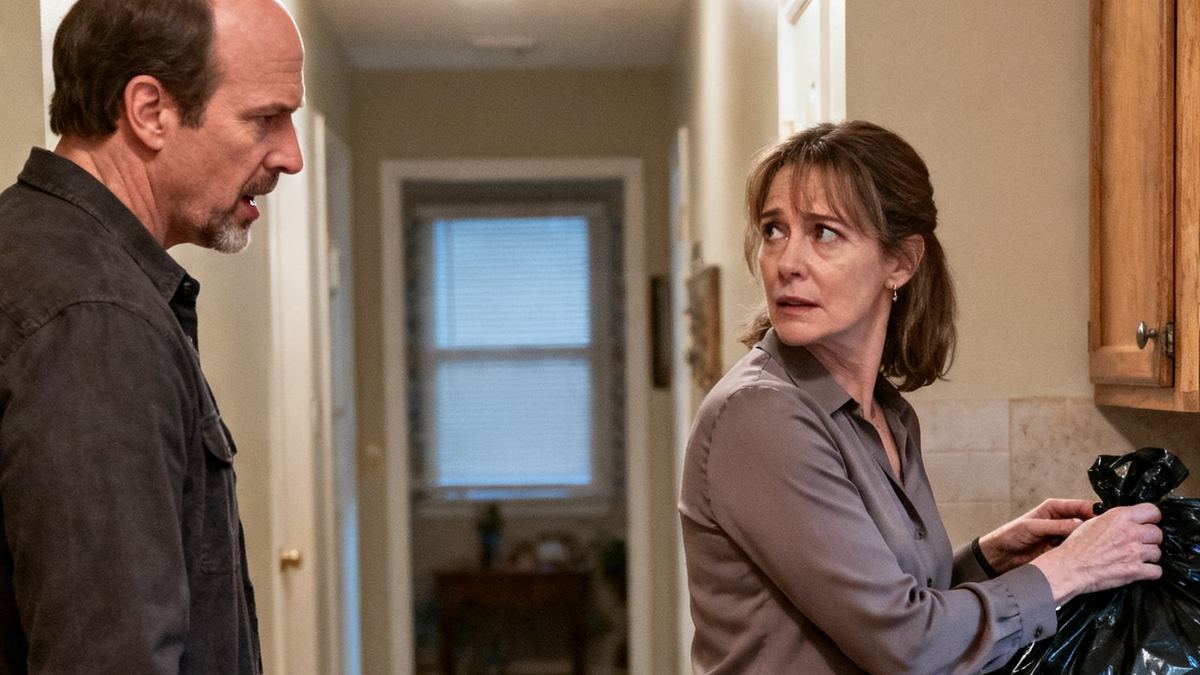
"You want to know the truth, Laura? Being with you is like settling into my dad’s old Barcalounger. It’s comfortable. Predictable. But there’s zero jolt—no fire. And Tessa? Tessa is a lightning strike."
Greg said it in the hallway of our Pearl District condo, one hand clutching the handle of my gray hard-shell suitcase. *My* suitcase—the one I’d bought with my first real bonus, a splurge on something I wanted, not something the household needed. He couldn’t even locate his own luggage. In sixteen years of marriage, Greg lost his keys, his wallet, his deadlines, and every ounce of accountability. Now he’d found a twenty-seven-year-old barista named Tessa, and he was ready to bolt.
Rain streaked the floor-to-ceiling windows. I stared at him: forty-three, hairline in retreat, a soft paunch nudging the sweater I’d given him last Christmas. He posed like a romantic hero in some indie film, not a man about to abandon his life with someone else’s bag.
I opened my mouth but nothing came out. A chair. He’d just called me a piece of furniture. I felt something tighten in my throat, and for a second I couldn’t even form a word. Then I said, “So, what—you’re leaving?” My voice came out flat, almost bored.
He almost smiled. “See? That’s classic you. No tears. No fireworks. Just… a question. I’m so tired of logic. Tessa *laughs* when she’s happy. She cries at dog food commercials. Two weeks ago she made me drive to Cannon Beach at two in the morning just to watch the waves crash.”
“And what do you think I want?” I asked.
“You want the electricity bill paid, the recycling sorted, me home by seven. You’re not a wife anymore, Laura—you’re an operating system.”
I didn’t flinch. Didn’t cry. But behind my ribs, something cracked. I saw him exactly as he was: a man who’d coasted on my structure, my labor, my money, my relentless ability to hold everything together—and who now decided that stability was just another word for dull.
I swallowed. “Does Tessa know about the… the money stuff? The debt?”
His hand tightened on the suitcase. “What debt?”
“The lease on the Audi. The Visa that’s been maxed out since your fantasy football trip. The twelve thousand you still owe your brother after that taco truck investment.” I was listing things like I was reading a grocery receipt. My voice stayed quiet.
“That’s *our* financial stuff—”
“No. The car’s in your name. The card is yours. Your brother is yours. And this condo you’re standing in with my suitcase—it’s mine. Bought before we married, with my money. Remember you used to joke that I worked too hard for just four walls?”
Silence. The rain hammered the glass.
“Set my bag down,” I said. My hands were shaking, so I shoved them into my pockets. “I’ll get you a garbage bag. You can put your socks in it.”
He stared. “You’re being cruel.”
I didn’t answer. I walked to the kitchen, pulled a black trash bag from under the sink, and held it out. He took it, his face unreadable. He stuffed his clothes inside, grabbed the bag, and left. The door clicked shut at 9:34 p.m. I know because the microwave clock glowed right at eye level.
I stood there for a full minute, then walked into the kitchen. I opened the bottle of peaty Scotch he’d always called “too much like jet fuel,” and poured myself three fingers. I sat by the window with a box of tissues I’d set on the couch, as if grief were a meeting I’d scheduled. The tears didn’t come. My shoulders dropped, and I realized I’d been clenching my jaw so tight it ached. I ordered sushi from the place Greg hated, ate it straight from the carton, and threw his leftover half of a meatloaf into the trash.
A week later, I did cry. Not for him—for me. For the twenty-two-year-old who wanted to write travel essays and learn photography, but picked finance because “a real job is safer.” For every holiday I’d swallowed my own opinion to keep the peace. For the silent erosion of a woman into a piece of furniture.
I cried until my ribs ached. Then I washed my face, brewed strong coffee, and went to work. I was a senior financial controller at a construction firm in the Pearl. Greg knew I earned well, but he never asked for an actual number. He called my savings habit “your nervous little nest egg,” never understanding that the nest egg had paid for the hardwood floors, the trips to Hawaii, his mother’s medication, and a dozen of his “temporary emergencies.” He sold building supplies and made decent commissions, but money burned a hole in his pocket. He’d cover the internet bill and joke, “At least I’m the figurehead of this household.”
My real savings sat in a separate account. He thought it was “your rainy-day cushion.” He didn’t know the cushion was thick enough that his exit wasn’t a financial crisis. He also didn’t know about the small cabin near the Columbia River Gorge, technically in my sister’s name, where I slipped away whenever I needed quiet.
Three days after he left, the texts started.
“Where’s the title for my car?”
“Glove compartment. Same place it’s been for four years.”
“Can I swing by and grab it?”
“No. I’ll leave it with the front desk.”
Two weeks later: “I need my winter coats.”
“I’ll box them up and drop them at your brother’s.”
“You won’t even let me inside?”
I typed back: “The armchair isn’t taking visitors.” I almost deleted it, but then I hit send.
On Instagram, Tessa posted flat whites and neon cocktails and quotes about embracing chaos. Greg appeared in the photos wearing brand-new sneakers, his smile stretched too tight, a middle-aged man trying to outrun his own reflection. It took exactly five weeks for the shine to wear off.
He called and asked to meet. We sat in a diner off Burnside at seven in the morning, the sky still gray. The spring in his step was gone. He looked exhausted, his collar frayed, his bravado stripped down to something raw.
“Tessa left,” I said, not a question. I just watched him.
He blinked. “How did you—”
“You’re here, and you look like hammered shit.” I poured cream into my coffee and stirred. “What happened?”
He stared at his mug. “She said I wasn’t who she expected.”
“And who did you expect to be?”
A long, hollow pause. “Younger.”
I didn’t say anything. Just waited while the silence stretched between us. The diner radio hummed a country song I didn’t recognize.
“So it didn’t work out?” I finally asked.
“No. Turns out I’m just a forty-three-year-old man with debt and a habit of waiting for someone else to fix my life.”
That was the first honest sentence he’d spoken in years.
“I didn’t appreciate you,” he went on.
“No.”
“You held everything together.”
I set my spoon down. “Yes.”
He nodded, staring into his mug. “Is there any way back?”
I looked at him, this man I’d built a life around, and traced the rim of my cup with a fingertip. “No.”
“Not even a chance?”
I pushed my coffee away and stood up, pulled a ten-dollar bill from my purse and laid it on the table. “Greg, you walked out of a home I held together for sixteen years. I’m not doing that again.” I turned and walked out, and I didn’t look back.
The divorce was swift. He took the Audi, the debt, the boxes of sweaters, and the dawning comprehension that youth isn’t contagious. I kept the condo, the quiet, and the rest of my life.
That August, I drove to the Oregon coast alone. I sat on a weathered bench at Ecola State Park, watching the waves fold into mist. I ate crab cakes and walked barefoot on the cold sand. On a whim, I bought a pair of red stilettos at a boutique in Cannon Beach, wore them to a seaside restaurant, and after forty minutes kicked them off under the table and switched to flip-flops. I laughed at myself, loud enough that the couple next to me smiled. Instead of embarrassment, I felt the cold sand between my toes and the weight of the stilettos in my hand. I just sat there, letting the sunset color my skin.
A year later, Greg sent one last message: *I miss home.*
I wrote back: *You miss how I made it feel.*
He never replied.


